How a Hand Blender ODM Project Actually Works: From Idea to Delivery
If you’ve never worked directly with a factory on a custom hand blender project before, the hand blender ODM process can feel like a black box. How long does it take? What do you need to prepare? When do you pay, and when do you see samples?
We get these questions all the time. Here’s how a typical hand blender ODM process runs with us — from the first message to the finished shipment. No jargon, no mystery.
If you haven’t already read our guide on what to customize, start with our hand blender customization guide →.
Choosing a trustworthy manufacturer is the foundation of successful cooperation. Check our practical tips on evaluate a hand blender odm factory to pick a reliable partner.

Step 1: You reach out. We start a conversation.
You don’t need a finished product brief to contact us. A rough idea, a reference image, a target market, or even just a price point — that’s enough to begin.
We’ll ask a few practical questions:
- What market are you targeting?
- What power range or performance level do you have in mind?
- Do you have a preference on speed control type, body design, or attachments? Browse attachment options →
- Any certification requirements?
- What’s your expected timeline and initial order volume?
If you don’t have answers to all of these yet, that’s fine. Most people don’t. We’ll fill in the gaps based on what works for your market.
Step 2: We put together a configuration and quote.
Based on our conversation, we’ll propose a product configuration: motor power, speed control type, shaft material, body design (including the full-body steel sleeve if relevant), attachment bundle, and packaging.
You’ll get a quotation that breaks down:
- Unit cost at different order quantities
- Sampling cost and timeline
- Tooling cost (if new molds are needed)
- Estimated production lead time
This usually takes 2–3 working days from the time we have enough information. If something in the quote doesn’t match your budget, we’ll work through alternatives — different motor options, adjusted attachment bundles, simpler packaging — until we find a combination that works. Learn how our factory supports flexible ODM projects →
-819x1024.webp)
Step 3: We make your sample.
Once the configuration is confirmed, sampling typically takes 7–15 working days.
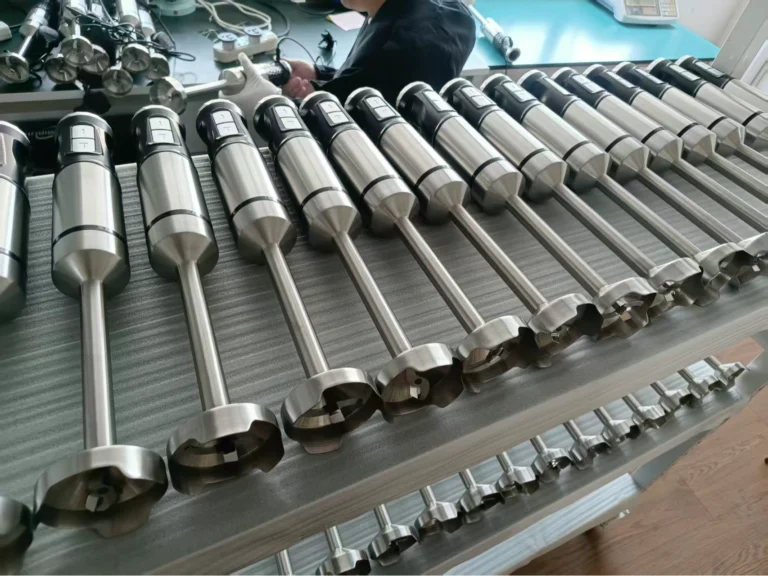
The sample is built to your specification — same motor, same shaft, same steel sleeve design, same attachments. See examples of our stainless steel shaft and steel sleeve detail → It’s not a “close enough” off-the-shelf unit with a new color. It’s your product, in sample form. It’s the tangible checkpoint every hand blender ODM process needs before mass production.
We’ll send photos and, if needed, video of the sample running before we ship it. When you receive it, test it thoroughly. If something needs adjusting, tell us. We’ll revise and send a second sample if required. The goal at this stage is to lock in a specification you’re confident about.
Step 4: We handle testing and certification together.
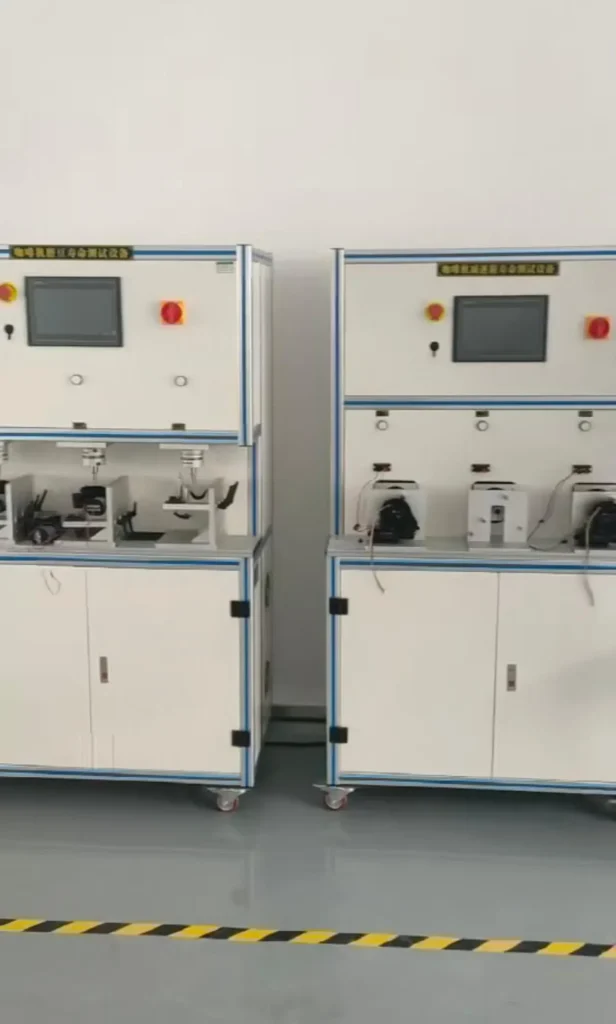
If your target market requires specific certifications — CE, LFGB, FDA, ETL, or others — this is when we plan them. Not after production has started.
For certifications, here’s how we approach it. We maintain documentation for several commonly required standards (such as CE marking under EU regulations). When a certification falls outside our existing file, we arrange it through accredited third-party testing labs. In either case, we’ll map out the timeline and cost before we begin — so you know exactly what to expect.
Step 5: Mass production — where we’re at our best.
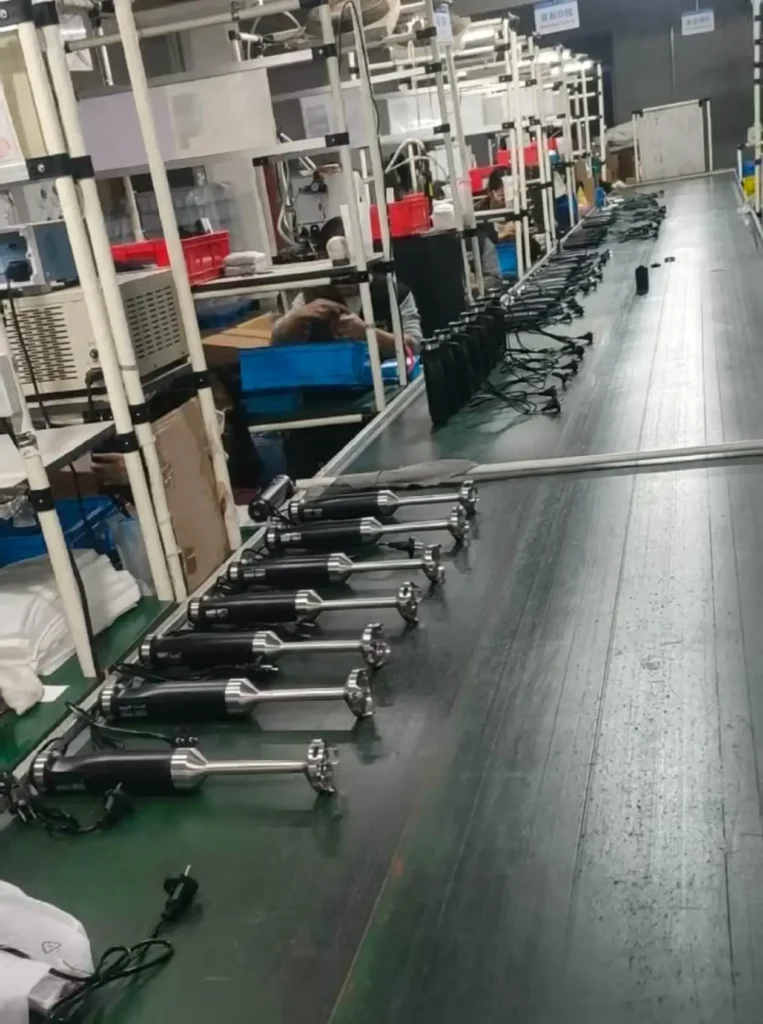
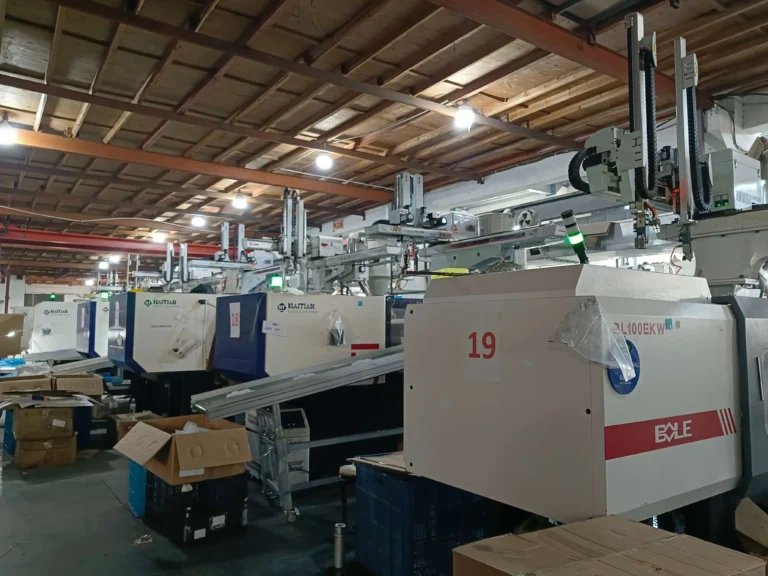
With the specification locked and certifications planned, we move into production. Here’s how the quality side works:
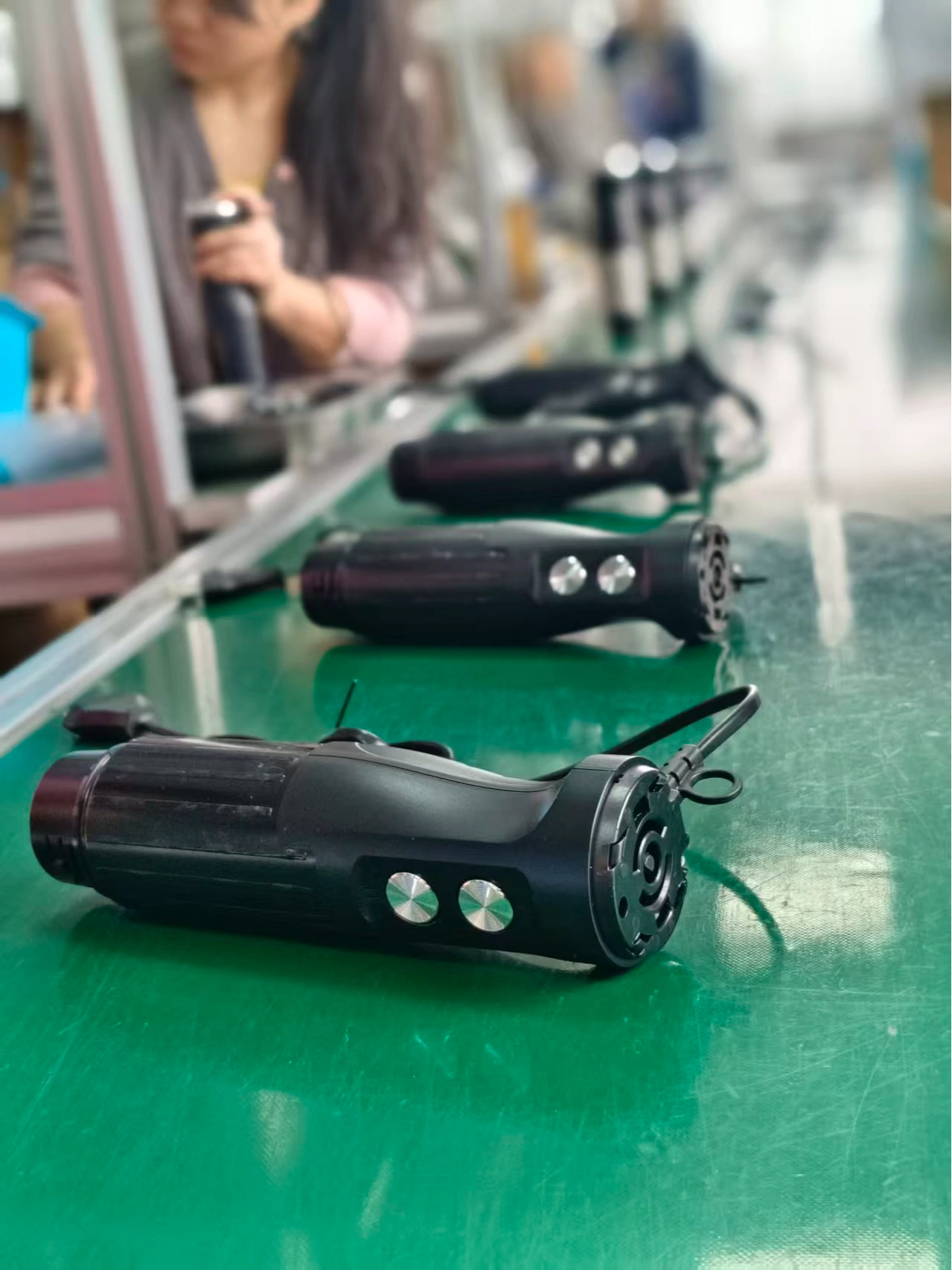
- Incoming material inspection: Every batch of motors, plastic, stainless steel, and packaging material is checked before it enters the production line.
- In-line QC: During assembly, our quality team checks randomly at key stages — motor function, switch responsiveness, shaft alignment, attachment fitting.
- Final random inspection: Before packing, finished units are pulled for a final check: power output, speed calibration, noise levels, visual appearance, and packaging accuracy.
You’re welcome to visit the factory during production, or we can arrange a video walkthrough if you can’t make the trip. Contact us to schedule a visit or video tour → Production lead time depends on order volume and configuration complexity. We’ll give you a clear timeline in the quotation stage and keep you updated along the way.
Step 6: Packaging and shipping.
After final QC passes, we finish the last steps in-house: packaging to your specification, master carton labeling, and palletizing where needed.
We then deliver your order to Ningbo or Shanghai port — both within easy reach of our factory. Export documentation — commercial invoice, packing list, and any other paperwork your shipment requires — is prepared on our side.
For shipping, we adapt to your setup. If you have a preferred forwarder, we coordinate directly with them to ensure a clean handover at the port. If you don’t, we can either recommend reliable forwarders from our network or handle the FOB booking ourselves — preparing all required export documentation and getting your container on board without complications.
Need the difference between FOB, CIF, and DDP explained in plain language? We’ll walk you through what each option actually means — from a factory that ships regularly, not a textbook.
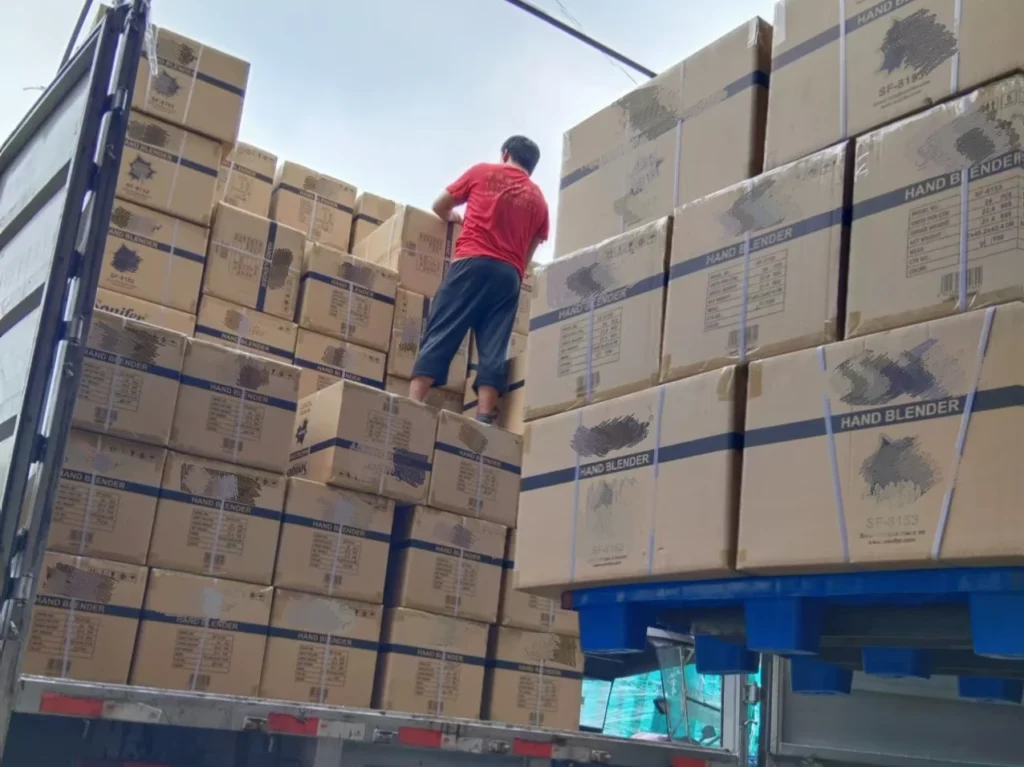
From start to finish
A typical ODM project, from first conversation to shipment, can range from 30 to 60 days depending on complexity, sampling rounds, and certification requirements. What matters in any hand blender ODM process isn’t just speed — it’s that at every step, you know what’s happening and why.
We handle the factory-side details. You stay informed without chasing anyone. That’s the hand blender ODM process we run every day.
-768x922.webp)